
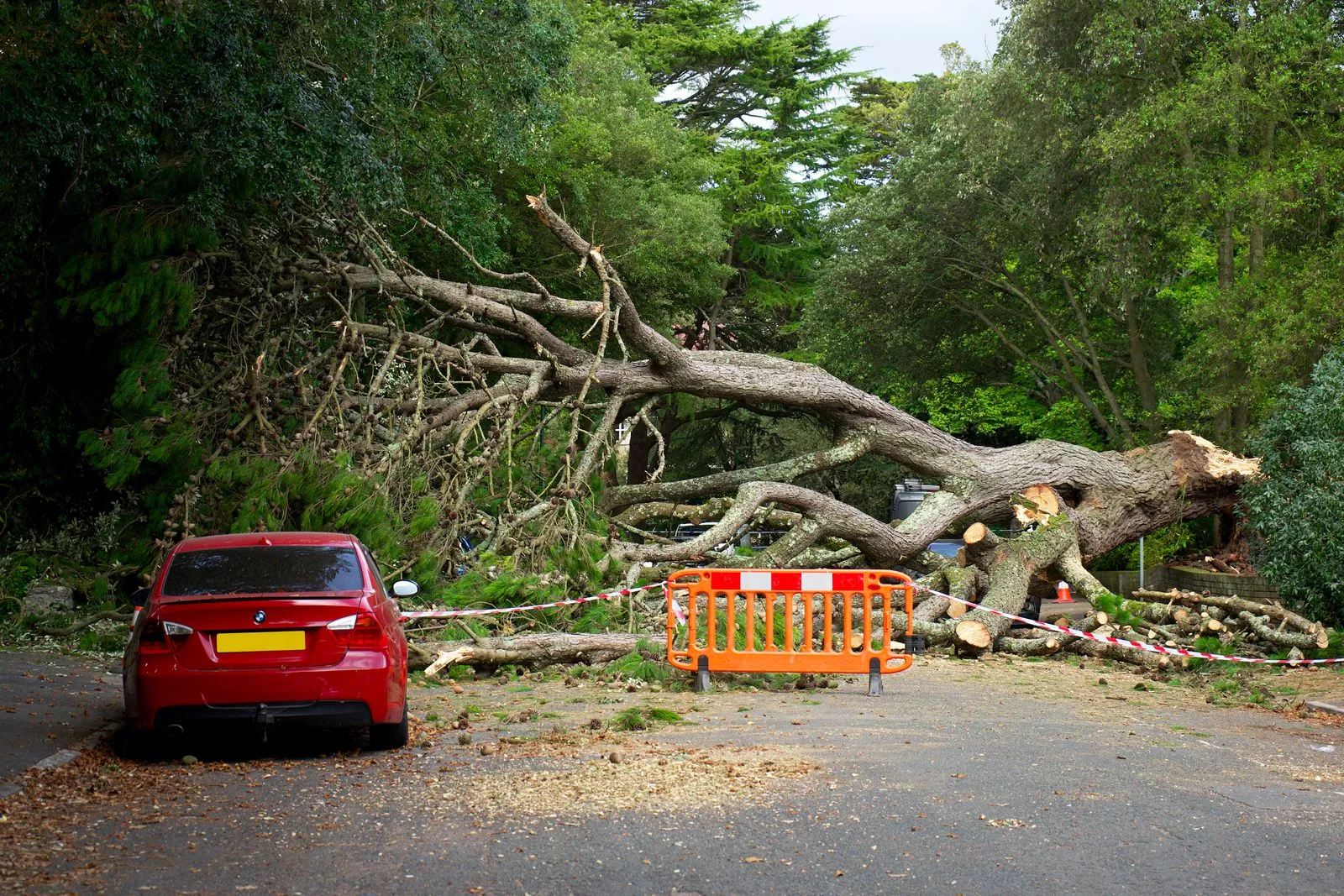
A tree can look unhealthy without needing removal, and some hazards are difficult to spot from the ground. The decision depends on the tree’s condition, stability, location, and potential impact if it fails. Look for changes such as a leaning trunk, major dead limbs, or damage around the roots, but avoid diagnosing the problem from one sign alone. An arborist can assess the risks and explain whether pruning, monitoring, or removal is the most appropriate next step.
Signs of Decline
Repeatedly bare branches during the growing season, widespread dieback, sparse foliage, or weak new growth can signal declining health. Check whether the symptoms affect one branch or much of the canopy. A single dead limb may need pruning, while decline across several parts of the tree can point to a deeper problem. Note when changes began and whether they are getting worse; that timeline can help an arborist assess the tree.
Fungi growing from the trunk or near the base, cavities, loose bark, and soft or decayed wood deserve attention. These signs do not prove that a tree must come down, but decay can weaken important support structures. Avoid cutting into the trunk or removing growth to investigate. Take clear photos from a safe distance and arrange an assessment, particularly if the tree stands near a home, driveway, or public path.
Damage and Stability
A newly leaning tree, cracked trunk, split union where major stems meet, or large broken limb may indicate an immediate hazard. Look for lifted soil or exposed roots around the base, especially after strong winds or ground disturbance. Keep people and pets away from the area if the tree appears unstable. Do not climb it, cut major limbs, or park beneath it while waiting for professional advice.
Storm damage can leave a tree looking upright while hidden cracks or torn roots compromise its strength. Large dead branches above places people use also create a falling-limb risk. If a branch or trunk is touching a power line, keep clear and contact the utility provider or emergency services as appropriate; never attempt to move or cut it. For other urgent damage, request a prompt arborist assessment.
Location and Potential Risk
A tree’s position matters as much as its condition. A weakened tree over a roof, play area, parking space, or neighboring property can pose more risk than the same tree in an open area. Consider what could be struck if a limb or the whole tree fell, and whether people regularly pass beneath it. An arborist can evaluate likely failure points and help distinguish a manageable concern from a serious hazard.
Roots near paving, drains, or foundations may cause conflict, but visible root growth alone does not establish that removal is necessary. Before changing or cutting roots, seek professional guidance because root damage can affect stability. Check local requirements before removing a tree; rules may depend on its location, size, or protection status. Auckland Tree Care can assess a tree and discuss practical options for the site.
When to Call an Arborist
Arrange an assessment if you notice worsening dieback, significant decay, a new lean, cracks, root movement, or repeated limb failure. Seek urgent advice after a storm if the trunk is split, the tree is partly uprooted, or heavy limbs are suspended overhead. If there is no immediate danger, share photos and describe recent changes when booking. Keep clear of suspect areas until you know whether the tree is stable.
Removal may be appropriate when the tree is dead, structurally compromised, or presents a risk that cannot be managed through pruning or other care. In less severe cases, an arborist may recommend targeted pruning, monitoring, or changes to how the area is used. Ask what evidence supports the recommendation, what alternatives exist, and whether permissions are needed. A clear assessment helps you make a safer, informed decision.
Decline, damage, and location can all affect whether a tree needs removal, but no single symptom tells the whole story. Keep clear of obvious hazards and have an arborist assess concerns before taking action. Contact Auckland Tree Care to arrange an assessment and discuss the options for your tree.